Conference Speakers
Please scroll down to find all keynote and best paper award presenters
Keynote - Tuesday
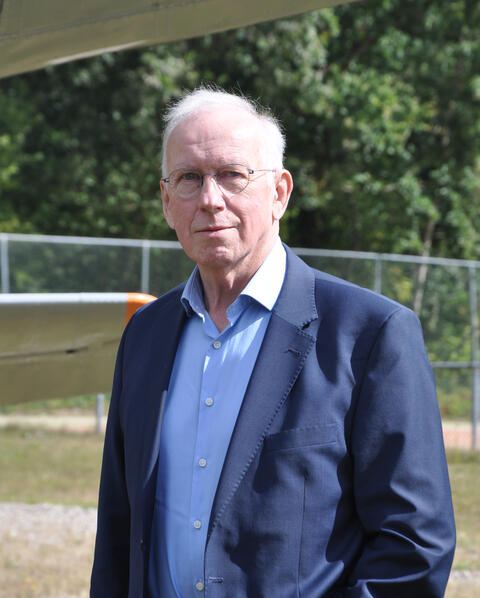
drs. Ir. André Droog
EAAP – The First 70 years: Pioneers, Pursuit and Passion
André Droog has studied and worked in aviation since 1965. He holds an MSc in Aerospace Engineering from the Delft University of Technology (1972) and an MSc in Psychology from the University of Utrecht (1986). His interest in psychology had already been aroused in Delft during his specialization in Industrial Organization , and he joined the Dutch Foundation for Psychotechnics (Nederlandse Stichting voor Psychotechniek, NSvP) in Utrecht in 1973. At NSvP, he received on-the-job training in the selection of pilot trainees for the Dutch Government Flying School (Rijksluchtvaartschool), which has trained pilots for KLM Royal Dutch Airlines since 1946. He pursued his study of psychology in 1978 while remaining employed at NSvP. He specialized in the psychology of personality, organizational psychology (the airline captain as flight manager), and clinical psychology (stress in pilots), and modernized the NSvP (later Psychotechniek Ltd. and SHL) test battery.
In 1988, he joined the government flying school, which became owned by KLM and was renamed KLM Flight Academy in 1991. As a psychologist for the non-technical training and human factors education of the ab initio student pilots, he also assisted many of them in overcoming performance problems or mental stress. He conducted instructor courses, coached instructors, and was on the training staff and selection board of the academy. He retired in 2010.
His first EAAP conference attendance was in 1983 in the Netherlands, and he joined EAAP as a member in 1985. He became Secretary of the EAAP Board in 2002 and was the EAAP President from 2014 until 2018. He received the EAAP Award in 2024. At present, he is still active in the EPPSI group.
Abstract
The keynote address is about the history of the association that was created in 1956 as WEAAP and became EAAP by decision of the General Assembly in 1994. It describes how it all began and identifies decisive moments in EAAP's development from the pioneering phase into an effective and influential professional organisation. It highlights both its activities, publications, and collaborations, as well as its growth and changes to the management and Articles of Association.
Keynote - Wednesday
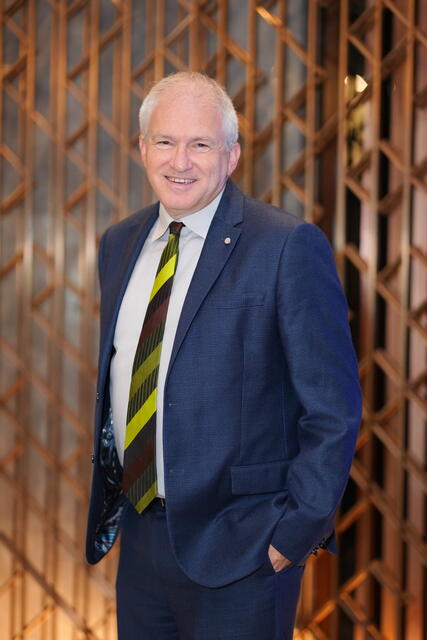
Mr. Philip Baum
Trusted Access, Hidden Risk: Understanding the Insider Threat to Civil Aviation
Philip Baum is an acclaimed security professional and recipient of the 2021 Lifetime Achievement and Contribution to Aviation Security award. With over 35 years of expertise, primarily within international civil aviation, Philip has established himself as a leading authority in the field.
Philip's journey in aviation security began in the 1980s with Trans World Airlines at London Heathrow. In 1996, he founded Green Light, a consultancy providing specialised training and strategic solutions for aviation security. Through Green Light, Philip acts as a subject matter expert for many international organisations including the Airports Council International (ACI), the International Air Transport Association (IATA), the United Nations Office for Counterterrorism (UNOCT), and the United Nations Office on Drugs and Crime (UNODC).
His expertise also led to his rôle as an expert witness for the UK House of Commons' Home Affairs Committee inquiry into aviation security, following the attempted aircraft bombing on Christmas Day 2009. Additionally, Philip serves as a Visiting Professor of Aviation Security at Coventry University.
Philip's commitment to practical, intelligence-driven security solutions led to the development of T.R.A.P.® (Tactical Risk Assessment of People), an innovative risk-based system grounded in non-racial profiling, observational techniques, and effective questioning. In addition to delivering IATA's Inflight Security courses, Green Light conducts train-the-trainer programmes for airlines around the globe, focusing on hijack management and unruly passenger prevention, identification, de-escalation and restraint.
Recognised for his thought leadership, Philip has founded (and chairs) conferences such as the Behavioural Analysis series (focussing on the detection of hostile and negative intent), DISPAX World (addressing unruly airline passenger behaviour), and Body Search (exploring methods of screening individuals for access to security sensitive locations).
His tenure as Editor-in-Chief of Aviation Security International spanned 24 years (1997–2021), and his book, Violence in the Skies: a history of aircraft hijacking and bombing (2016), has received wide acclaim. Frequently featured on CNN, Sky News, and the BBC, Philip provides expert insights on aviation security issues. He is a sought-after speaker, moderator, and conference chair at leading international symposia, offering dynamic perspectives and facilitating critical debates.
Abstract
Civil aviation security has historically been designed to defend against external adversaries; however, some of the most consequential threats to aircraft safety originate from individuals entrusted with privileged access, operational authority, and institutional confidence. This keynote examines the evolving challenge of the insider threat in civil aviation and considers how trusted personnel can become the source of catastrophic risk.
Delivered from the perspective of aviation security practice (rather than clinical psychology), the presentation explores the insider threat as a multidisciplinary challenge at the intersection of security, human performance, organisational culture, behavioural observation, and risk governance. Particular attention is given to aircraft-assisted suicide and intentional acts by flight crew, drawing on selected case studies including, for example, the losses of Royal Air Maroc, LAM Mozambique Airlines, and Germanwings flights, alongside incidents in which aircrew exhibiting concerning behaviour were identified and successfully restrained before disaster occurred. The keynote will also consider unresolved or contested cases in which intentional human action has been proposed as a possible explanatory factor, including events such as the loss of both China Eastern Airlines and Malaysia Airlines aircraft.
The session will examine recurring themes across insider events: behavioural indicators, stressors and vulnerabilities, organisational blind spots, barriers to reporting, overreliance on trust, and the limits of existing assurance mechanisms. The discussion will address the challenge of distinguishing normal variation in human behaviour from patterns that warrant concern, while recognising the operational and ethical complexities involved.
The keynote argues that effective mitigation of insider threat requires moving beyond traditional compliance models toward an integrated approach that combines security awareness, supportive reporting cultures, proportionate intervention pathways, and stronger collaboration between security, operational, and psychological disciplines.
This presentation is intended to stimulate discussion on how civil aviation can better identify, understand, and manage insider risk while preserving the trust on which safe and effective operations depend.
Keynote - Thursday
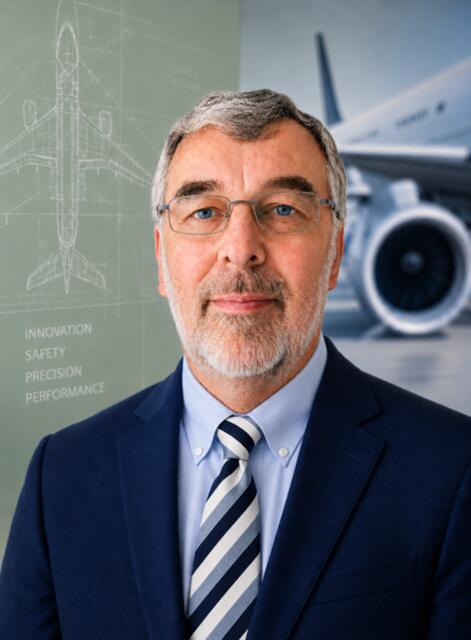
Prof. Don Harris
EAAP - The Next 70 Years: Citius, Altius, Sapientius
Don Harris retired from Coventry University where he was professor of Human Factors in May 2025. He is currently a visiting professor at Emirates Aviation
University in Dubai. Prior to that he was a visiting professor at Shanghai Jiao Tong University.
Prior to joining Coventry Don was Managing Director of HFI Solutions ltd and before that he was an academic at Cranfield University. In 2006 Don received the Royal
Aeronautical Society Bronze award and Hodgson Prize for work leading to advances in aerospace and in 2008 was part of the Human Factors Integration Defence
Technology Centre team that received the Ergonomics Society President's Meda. In 2024 he received two further Bronze awards from the Royal Aeronautical Society for
papers relating to the design and operation of single crew commercial aircraft. He was a Fellow of the Institute for Ergonomics and Human Factors and a Chartered
Psychologist.
Don has been involved in the design and certification of flight deck interfaces; has worked in the safety assessment of helicopter operations in the North Sea and was an aircraft accident investigator specialising in Human Factors. He provided Human Factors design and certification support to COMAC, the Chinese Commercial Aircraft Manufacturer. Don was a member of the Human Factors National Technical Committee for Defence and Aerospace and for 28 years was the Chair of the
International Conference series on Engineering Psychology and Cognitive Ergonomics.
Abstract
The first 70 years of EAAP saw the evolution of human factors and aviation psychology from a niche scientific discipline into a core profession in the aviation industry, right at the centre of flight safety, a profession that no one questions the importance of.
The role of the human in the system will be closely associated with expected technology developments, such as the emergence of hydrogen-powered and all-electric aircraft; there is once again increasing interest in blended wing body designs and a return to supersonic (perhaps even hypersonic) passenger travel. There will be a reduction in crew numbers, perhaps leading to fully autonomous, pilotless flight for commercial cargo. Flights will be overseen from large operations centres, using AI to plan and optimise routes and monitor aircraft performance and health. These will increasingly be integrated with Air Traffic Management Centres. Space exploration will extend beyond the moon to Mars and spacefaring will transition from a scientific and exploratory frontier to an economic activity.
The next 70 years put the human right at the heart of developments in aerospace. The human being will become completely integrated into design and operations: the pilot will experience an increasingly cybernetic relationship with their machine. The Air Traffic Controller will become the Air Traffic Manager, overseeing the system, not controlling the aircraft. Selection and training requirements will need to keep pace.
With the increase in human exploration and exploitation of space, aviation psychology will become aerospace psychology (or has this already happened)?
Best paper award

Effect of Pilot Expertise on Visual Scanning and Precision of Flight Maneuvers in Military Aviation Quentin Vantrepotte
Quentin Vantrepotte is a French researcher in cognitive science and Human-Computer Interaction, specializing in human factors and human–machine interaction. His research focuses on visual attention and eye-tracking applied to pilot training, with the development and evaluation of tools designed to analyze and improve pilots' visual strategies. He has also studied how automation degradation affects sense of control, trust, and system acceptability in human–machine interactions.
Abstract
This study explored how expertise affects visual scanning strategies and the precision of flight maneuvers in military aviation. A total of 38 French Air Force pilots of three different expertise levels performed horizontal and vertical maneuvers in a flight simulator. Flight performance analysis showed that novices had larger deviations in roll, heading, and speed compared to cadets and experts, underlining the role of expertise on the precision of flight maneuvers. Eye-tracking analysis revealed that expert pilots used more efficient gaze strategies, focusing on key parameters such as pitch and power. Our results suggest that eye-tracking could significantly enhance pilot training by providing insights into expertise-specific visual behaviors. Future work will explore the use of real-time eye-tracking data to deliver immediate feedback, guiding pilots' visual focus during training.
In collaboration with